06 July 2026

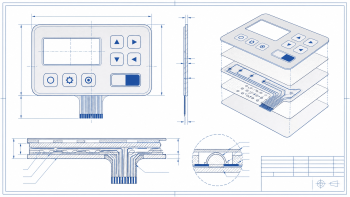
Membrane Switch Technical Specifications: The Spec Guide

The technical values you need when writing a membrane switch specification: layer count, total thickness, overlay material, key life, actuation force, LED life, operating temperature, IP rating, ZIF connector, adhesive and cutting tolerance in one guide.
23 June 2026

Production-Ready Technical File: Drawings, Pantone Colour Matching and a Checklist

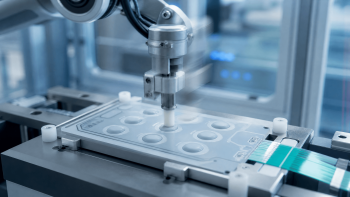
On a membrane switch or embossed graphic panel project, the lead time to first sample is usually set not by production capacity but by the maturity of the incoming data pack. A production-ready technical file is the set of documents that lets the manufacturer start film output, cutting programs and

19 May 2026

What Does "1 Million Cycles" Mean? Keypad Life and Test Methods

"1 million cycles" is the most common line in a membrane keypad specification. On its own it is not a durability guarantee; it is a measurement result obtained on a defined test rig, at a defined actuation force, against a defined pass/fail criterion. The same keypad may comfortably exceed one milli

14 April 2026

10 Critical Mistakes in Membrane Switch Design

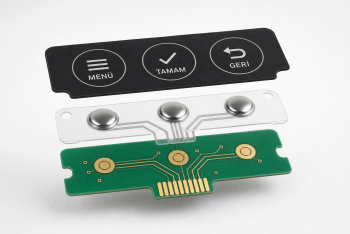
Membrane switch design looks at first like a printed overlay sitting on top of a circuit. In practice it requires six to eight layers to work together mechanically, electrically and chemically; a typical six-layer build measures 0.9-1.4 mm in total thickness, and within that roughly one-millimetre b

10 March 2026

Membrane Switch Connector Selection and Tail Design Guide: ZIF, Crimp and Soldered Terminations

In membrane switch projects, a significant share of field failures occurs not in the key area but at the tail leaving the panel and at the connector interface. Membrane switch connector selection and tail design are usually addressed at the very end of a project, once the mechanical layout is frozen

27 January 2026

Design and Selection Criteria for LED Backlit Panels

Designing an LED backlight panel is not a matter of adding light to an existing front panel. The light source type, the distribution layer geometry, the resistance of the printed silver circuit and the thickness budget form a single coupled optical-electrical-mechanical problem. When a panel that pa

16 December 2025

IP65 vs IP67: How Sealing Is Achieved in a Membrane Switch

One of the most frequently specified — and most frequently misread — lines in machine and enclosure specifications is the ingress protection rating. The difference between IP65 and IP67 is usually interpreted as "67 is the bigger number, therefore better". In reality IEC 60529 defines these as two i

04 November 2025

Polycarbonate vs Polyester: Front Panel Overlay Material Selection Guide

In membrane switch, embossed graphic panel and backlit panel projects, the first serious engineering decision is not the circuit layout or the dome selection — it is the front surface film. The choice between polycarbonate (PC) and polyester (PET) directly governs key life, resistance to cleaning ch

23 September 2025

Membrane Keypad Failures: 7 Common Problems, Causes and Fixes

Membrane keypad failures rarely have a single cause: mechanical fatigue (dome, emboss corner, tail bend) overlaps with an environmental effect (humidity, thermal cycling, cleaning chemicals) and the fault surfaces months later. Below are seven frequent failure modes, each with its measurable symptom

19 August 2025

Metal Dome vs Poly Dome: Tactile Feel, Service Life and Cost

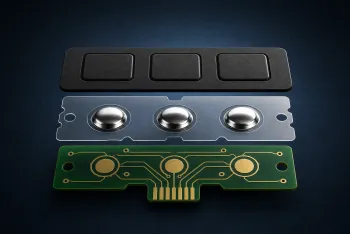
In a membrane switch project, the earliest decision is also the most expensive one to reverse: what goes under the key — a metal dome or a poly dome ? The choice is not just about "click feel". It simultaneously determines total panel thickness, cycle life, operating temperature range, the debounce

08 July 2025

What Drives Membrane Switch Cost and What an RFQ Needs

There is no single list price for a membrane switch. Two panels with identical outside dimensions can differ by a factor of two or three in cost, purely because of layer build-up and function. This article breaks membrane switch cost down driver by driver, gives the data set that lets a supplier quo

27 May 2025

Membrane Keypad Manufacturing: Discover the Quality of Tuşhan

Membrane keypads are economical and flexible interfaces that operate with conductive circuits integrated into thin film layers. They have a wide range of applications, from industrial automation and medical devices to household appliances and automotive industries. Critical stages in the manufacturing process include material selection, screen printing, and lamination. Expected to evolve further with touch-sensitive, flexible, and eco-friendly technologies in the future, membrane keypads offer p

13 May 2025

Keypad Manufacturing

Keypad manufacturing covers the production process of control interfaces, which are used as a critical component in many industries such as industrial automation, consumer electronics, medical devices and the defense industry.

24 April 2025

What is a Membrane Keypad?

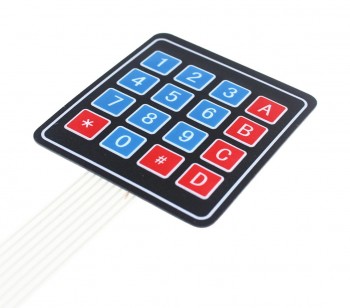
Membrane keypads are a frequently preferred control interface in electronic devices due to their thin and flexible structure. Unlike mechanical keypads, they use a structure consisting of thin layers that are sensitive to pressure instead of a physical switch mechanism.

01 April 2025

What is a Membrane Switch? Design and Manufacturing Processes

Membrane switches are multi-layered user interface control panels that offer a thinner, more hygienic, and cost-effective alternative to traditional mechanical switches. Utilizing printed circuit technology on a flexible film, these switches provide durability and flexibility, making them a reliable solution, especially in environments with challenging conditions.

10 March 2025

Lighted Membrane Keypads: What Are They and How Are They Manufactured?

Lighted membrane keypads are emerging as a breakthrough technology in industrial control systems. These keypads, integrated with LED lighting, offer excellent visibility even in low-light conditions, reducing user errors and enhancing operational efficiency. This technology, used in a wide range of applications from automation systems to medical devices, aviation to mining, stands out with its durability, flexibility, and customizability, shaping the future of industrial interfaces.

15 February 2024

Membrane Keypad and Switch Manufacturing

Membrane keypad technology is an indispensable part of modern industrial control systems and electronic devices. Known for its slim design, durability, and versatility, this technology finds wide application across various industries. We will explore the manufacturing processes of membrane keypads, membrane keyboards, membrane buttons, and membrane switches in detail.

09 January 2025

Lexan Keypad and Switch Manufacturing: The Future of Industrial Control

Lexan keypads and switch technology are essential components in industrial control systems. Known for their durability, customizable design, and innovative features, this technology is frequently used in the manufacturing of keyboards and switches.

22 December 2024

The Role of Touch Keypads in Security

Touch keypads have become an integral part of digital security today. Especially when integrated with biometric authentication systems, they provide an effective solution to protect users' information and data.

12 November 2024

Touchscreen Keypads and User Experience, Design Principles and Enhancements

The focus is on how keypad interfaces influence user experience and the design principles associated with them. It discusses the need for touchscreen keypads to be ergonomic and user-friendly, emphasizing the design principles to consider for achieving this. Additionally, it explores how user feedback can be evaluated and discusses potential improvements to enhance user satisfaction with touchscreen keypads.

08 October 2024

Touchscreen Keypads Evolving Technology and Applications

The technological evolution of touch keypads and their common usage areas today are examined. It discusses how touch keypads have gone through a process of change, from smartphones to tablet computers, from ATMs to automobile consoles, and the importance of this technology in daily life. Additionally, potential future application areas and predictions for further development of the technology are shared.